
Mediterranean Manuscript Collections: Where to Find Them

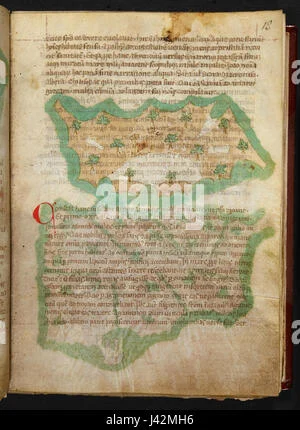
Mediterranean manuscript collections are holdings of handwritten codices and fragments—often in Arabic, Greek, Hebrew, Latin and Romance languages—kept in national and university libraries around the Mediterranean. Researchers usually find them through library catalogues and digital portals, then consult originals in reading rooms by appointment.
Where Mediterranean manuscript collections are held
Most surviving collections sit in medieval manuscript libraries and in national libraries that absorbed earlier institutional holdings. The Bibliothèque nationale de France, the British Library and the Biblioteca Apostolica Vaticana are central reference points, but the geography is wider. University and national libraries in Spain, Italy, Egypt, Turkey and Morocco hold substantial groups of codices and fragments, often described in separate manuscript departments.
BnF Archives et manuscrits, for example, brings together the Département des Manuscrits, the Bibliothèque de l’Arsenal and other heritage departments, and points from its records to Gallica and to CCfr Manuscrits. That division of labour is common: a national catalogue describes the item, a digital library supplies the images, and a union catalogue links institutional holdings.
The same pattern repeats beyond national libraries. The British Library keeps its Asian, African and European manuscript collections in a searchable archive catalogue, and the Biblioteca Apostolica Vaticana makes a large body of its holdings visible through the Digital Vatican Library. Each institution separates the descriptive record from the digital facsimile, which is why a researcher following a manuscript must keep both the catalogue entry and the image portal in view.
Smaller institutional collections matter as well. The Budeiri Library in Jerusalem preserves a family collection that shows how local manuscripts can remain tied to their original owners and neighbourhood. For the ancient city of Alexandria, the surviving manuscript record is not a single continuous collection; what the Library of Alexandria manuscripts label means today, and what actually survives, is a separate question from modern Mediterranean manuscript collections.
Researchers should therefore treat “where” as a network of institutions rather than one library. A manuscript may be described in a national catalogue, held in a municipal library, and reproduced in a digital portal; the catalogue record is the link between the three. Starting from any one of those points usually leads, through a shelfmark, to the other two.
Catalogues and digital libraries
Before planning a visit, manuscript catalogues online are the fastest route from a name or topic to a specific item. Three starting points cover different parts of the Mediterranean record: BnF Archives et manuscrits, the Digital Vatican Library and the British Library’s manuscript catalogue.
| Institution | Catalogue or portal | Type of access | Interface language | Reading-room access |
|---|---|---|---|---|
| Bibliothèque nationale de France | BnF Archives et manuscrits | Free online catalogue; records link to Gallica and CCfr Manuscrits | French | Confirm current reader registration and appointment rules with the library |
| Biblioteca Apostolica Vaticana | Digital Vatican Library | Free online catalogue with digitised manuscripts and descriptions | Italian, English | Confirm current reader access with the library |
| British Library | Explore Archives and Manuscripts | Online catalogue; some records include images | English | Confirm current reader registration and booking rules with the library |
A catalogue record describes the item; it is not the same as a scan. The record usually gives a shelfmark, a title or description, language, date and sometimes provenance. Digitisation widened access, but the descriptive record is what lets researchers find and cite the item. For the digitisation pipeline and the portals that host images, see digitising Mediterranean manuscripts.
Reading the evidence: scripts, languages, shelfmarks
A manuscript is any handwritten item; a codex is the bound book form, as distinct from a roll. A folio is a leaf of the book, and citations normally refer to folio number and side, such as fol. 12r or fol. 12v. The shelfmark is the stable identifier used to order the volume; it usually combines a collection name or code with an item number, and it should be copied exactly from the catalogue.
From that point, the record answers four questions:
- Language and script. Arabic manuscript collections in the Mediterranean are often written in Naskh, a rounded bookhand common in Arabic copies, or Maghribi, associated with North Africa and al-Andalus. Greek, Latin and Hebrew manuscripts use their own script labels. A catalogue may also specify whether a single volume contains more than one language, which is frequent in Mediterranean codices.
- Date. A catalogue may give a century, a range, or a precise date when the colophon supplies one. Dates are usually recorded in the Islamic calendar for Arabic manuscripts alongside the Common Era equivalent, and the catalogue should state which system it uses.
- Copyist and place. The colophon, usually at the end of the text, can record the copyist, the date and sometimes the place of copying, but it must be read with care: a colophon may copy an earlier note instead of describing the present copy.
- Provenance. This is the later history of ownership, shown by notes, stamps, bindings and library marks. A stamp may belong to a mosque, a private collector or a later library, and reading those marks in sequence can reconstruct how the volume travelled.
Other working terms appear in the same records: codicology (the study of the manuscript as a physical object, including paper, quires and sewing), palaeography (the study of old handwriting), binding (the structure that holds the text block), conservation (care of the physical manuscript) and digitisation (the production of a digital facsimile). A finding aid describes a whole collection and can help when a single manuscript is not enough. Special collections are the restricted, separately housed parts of a library that hold rare and unique material, often including manuscripts; they are usually where the reading room is located. For continuity between manuscript and printed traditions, the separate note on printed Arabic and Berber language manuals offers background on the printed side of the same language communities.
Getting help and planning a visit
Each reading room has its own rules, so planning should move from the catalogue to the institution.
- Note the shelfmark and the collection name exactly as the catalogue gives them.
- Check the record for restrictions, language and script, and any linked images.
- Contact the manuscripts or special collections reading room before travelling. Many libraries require reader registration and an advance request, and some ask for a letter of introduction or a statement of research purpose.
- Confirm what identification and what personal items are allowed. Reading rooms often require lockers for bags and permit only pencils and loose paper on the desk.
- Request the item with the shelfmark and allow time for staff to check that it can be served. Binding condition and conservation status can affect whether a manuscript is available that day.
Library staff can also explain finding aids and help with questions about provenance or script. A catalogue record is a summary, not the whole evidence; the manuscript itself is the primary source, and the reading room is where it can be examined. Even when a digital facsimile exists, a printed or photographed reproduction of a binding, a margin or a watermark may require the physical volume itself.
A first search to try
In BnF Archives et manuscrits, open the simple search and enter a single term close to your interest—for example, a language, a place name or a collection name. Review the record for the shelfmark and follow the record to a linked digital copy when one is available. If no copy appears, use the shelfmark to plan a reading-room request.
Keep reading