
Digitising Mediterranean Manuscripts: Process, Portals and Access

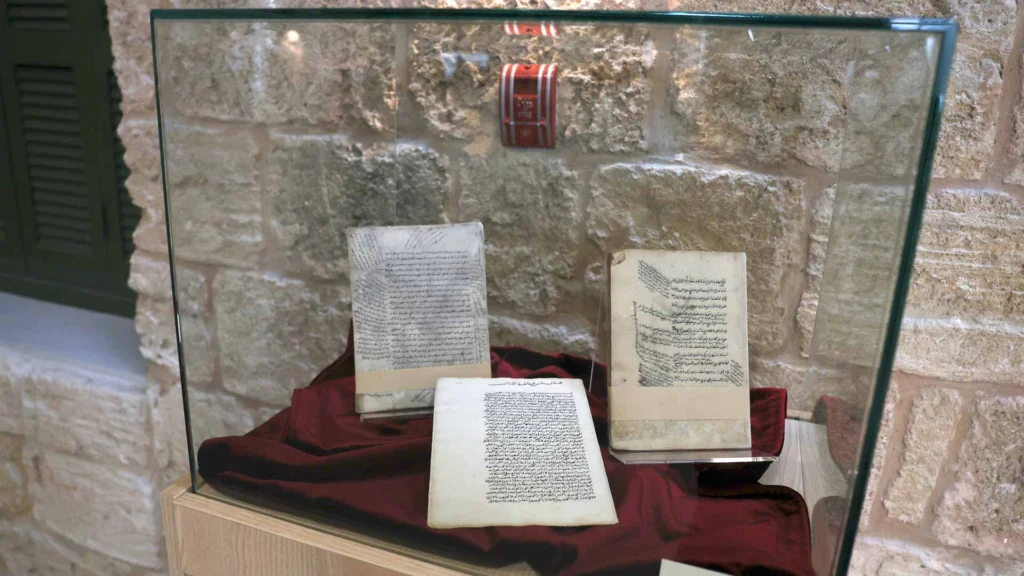
Digitising Mediterranean manuscripts means photographing or scanning a codex, then describing it with cataloguing metadata so researchers can find and cite it. A scan is not a catalogue. Greek, Arabic, Hebrew and Latin collections now reach readers through portals such as Europeana, Gallica and Cambridge Digital Library, mostly using the IIIF image standard.
Mediterranean manuscript heritage spans Greek, Arabic, Hebrew and Latin books, from bound codices (books made of folded leaves) to loose folios (single leaves). A digital facsimile is not a catalogue record, and a catalogue record does not guarantee a good image. This guide separates capture, cataloguing and access, and points to institutional collections where readers can check the distinction. Read more about the editorial scope of manumed.org.
What does digitising a manuscript mean?
In a library or archive, digitising a manuscript usually means two distinct jobs. The first is imaging: a photographer or scanner produces image files that reproduce each page, opening and binding detail. The second is cataloguing: a specialist records shelfmark, author, date, script and provenance in a structured description.
A colophon, the note usually found at the end of a manuscript, can supply the copyist's name and date, which is why cataloguers read it first. Codicology, the study of the book as a physical object, and palaeography, the study of old handwriting, both shape that description. A digital image alone cannot tell a reader who made the volume or where it travelled.
A scan without a description is hard to find, and a description without an image leaves questions of layout, decoration and binding unanswered. Special collections speak of a digital facsimile, a page-by-page reproduction; it is not the same as a catalogue record.
How Mediterranean manuscripts are digitised
Most institutional projects follow the same sequence: capture, metadata, and delivery through an interoperable viewer. Mediterranean material adds no special step, but requires attention to multiple scripts and to collections spread across national and university libraries.
Capture and colour management
Guidance from the Library of Congress places capture for rare manuscript material between 300 and 600 ppi, with the higher end reserved for detailed or damaged originals. Institutions photograph with a colour target and controlled lighting so that gold, ink tone and repair marks are recorded consistently. Each folio is imaged flat, often with a scale, and the binding is documented separately. The goal is not a printable replica but a research image stable enough for repeated comparison.
Descriptive and structural metadata
Metadata starts with the shelfmark, the unique identifier assigned by the holding library. Standard fields include author or uniform title, date, place, script, material and provenance, often expressed in Dublin Core or TEI. Structural metadata maps each image to the correct opening or folio. Without this layer, a manuscript cannot be discovered through a portal or cited reliably in a footnote. Parts of a composite Mediterranean manuscript may need separate records, because Arabic, Greek, Hebrew and Latin sections can have different histories. Aggregators such as the British Library rely on this data.
IIIF, OCR and handwritten text recognition
For delivery, most Mediterranean manuscript portals use IIIF. The IIIF Image API lets a viewer request a specific region, size, rotation and quality from a high-resolution file. The Presentation API packages each image with its metadata. In printed and typewritten material, OCR can make text searchable; for handwritten scripts, HTR models are improving but still produce uneven results. A transcription does not replace cataloguing: it is added text, while the manuscript record continues to identify and describe the artefact.
Which Mediterranean collections are digitised?
Manuscripts in Greek, Arabic, Hebrew and Latin survive in institutions around the Mediterranean and beyond. The British Library holds extensive Arabic and Hebrew collections, with Greek manuscripts alongside Latin material. Cambridge Digital Library has published more than 800 Greek manuscripts online, most with IIIF-compatible views and catalogue records. Gallica, the digital library of the Bibliothèque nationale de France, brings together Mediterranean material from its own collections and from North African and Levantine partners. Arabic script appears in two widely used forms: Naskh for copying and reading, and Maghribi in much of North Africa, where bindings and layouts vary.
Other national repositories and university libraries hold sizeable digitised holdings, but coverage is uneven. Some collections are best searched by language or script rather than by modern country. A single shelf can hold Arabic, Hebrew and Latin manuscripts produced within a few decades of one another. For Greek texts, Cambridge's collection illustrates how a single institution can move from a printed catalogue to an online research platform with full images. Hebrew manuscripts appear through major western and Israeli repositories, often with detailed codicological notes. Latin manuscripts dominate many digital portals simply because European libraries began imaging them earlier.
Portals and standards at a glance
Standardisation is less visible than photography but matters more for reuse. Portals add value only when their records can share images and metadata across systems. Four resources cover most needs for Mediterranean manuscripts.
| Portal or standard | What it covers | Mediterranean relevance |
|---|---|---|
| Europeana | Aggregates more than 50 million cultural objects from European institutions | Cross-search for digitised manuscripts; many records point to IIIF viewers |
| Gallica (BnF) | Digital library of the Bibliothèque nationale de France | Arabic, Greek and Hebrew materials; strong holdings from North Africa |
| DMMapp | Directory of digitised medieval manuscript collections | Links to hundreds of libraries; useful for finding smaller repositories |
| IIIF | Image API and Presentation API standards | Serves high-resolution manuscript images interoperably across portals |
Europeana's figure comes from its own portal; DMMapp's count is a directory figure, not a statement of digitisation volume. No single portal is complete, so a manuscript may appear in Gallica and not in Europeana, or in a library catalogue under a Hebrew title rather than the Arabic title by which it is commonly known. Researchers should treat aggregators as discovery layers: the holding library remains the authoritative source for the shelfmark, condition and provenance.
Why digitisation matters — and what it cannot do
Digitisation widens access to materials that once required travel, letters of introduction or microfilm orders. It also produces a durable reference image that can reduce handling of fragile originals. But a digital facsimile does not conserve the physical manuscript: paper, parchment, pigments and bindings still age at their own rate. Nor does scanning solve intellectual access, because an uncatalogued manuscript remains hard to find. Conservation, cataloguing and digitisation are parallel commitments with different budgets, skills and timetables.
Mediterranean collections show all three in practice. A codex may be stabilised by conservators, described by cataloguers and imaged by photographers in the same year, but each specialist leaves a separate record. When only the images survive online, the object's history remains incomplete. The strongest projects therefore publish the technical note, the descriptive record and the images together.
How to consult and cite a digitised manuscript
Check the holding institution's page first, because the shelfmark and record are authoritative. Note the repository, collection and shelfmark in that order, then add the folio or opening if you used one. A URL alone is not a citation: portals change paths. Finally, if the record is missing, write to the library via its contact page before assuming the manuscript is absent. Corrections to this general guide are welcome via the contact page.
Frequently asked questions
What is the difference between digitising and cataloguing a manuscript?
Digitising creates an image; cataloguing creates the descriptive record with shelfmark, author, date, script and provenance.
Which portals have digitised Mediterranean manuscripts?
Europeana, Gallica, the British Library and Cambridge Digital Library are among the main entry points.
Are Arabic manuscripts available online?
Yes; the British Library and BnF Gallica hold substantial digitised Arabic and Mediterranean collections.
What is IIIF?
An international standard that serves high-resolution manuscript images and presentation metadata interoperably.
Does digitisation preserve the manuscript?
No; it records the object and widens access, but physical conservation is a separate task.
Sources
- Library of Congress — rare materials imaging guidance
- International Image Interoperability Framework (IIIF) — Image API and Presentation API
- Europeana — aggregation statistics and IIIF support
- British Library — manuscript collections and cataloguing practice
- Cambridge Digital Library — Greek manuscripts project
- Gallica (Bibliothèque nationale de France) — Mediterranean digital collections
- DMMapp — directory of digitised medieval manuscript collections
Privacy practices are set out in the privacy policy.
Keep reading