
Arabic Manuscripts in French Libraries: a Guide to Collections and Access

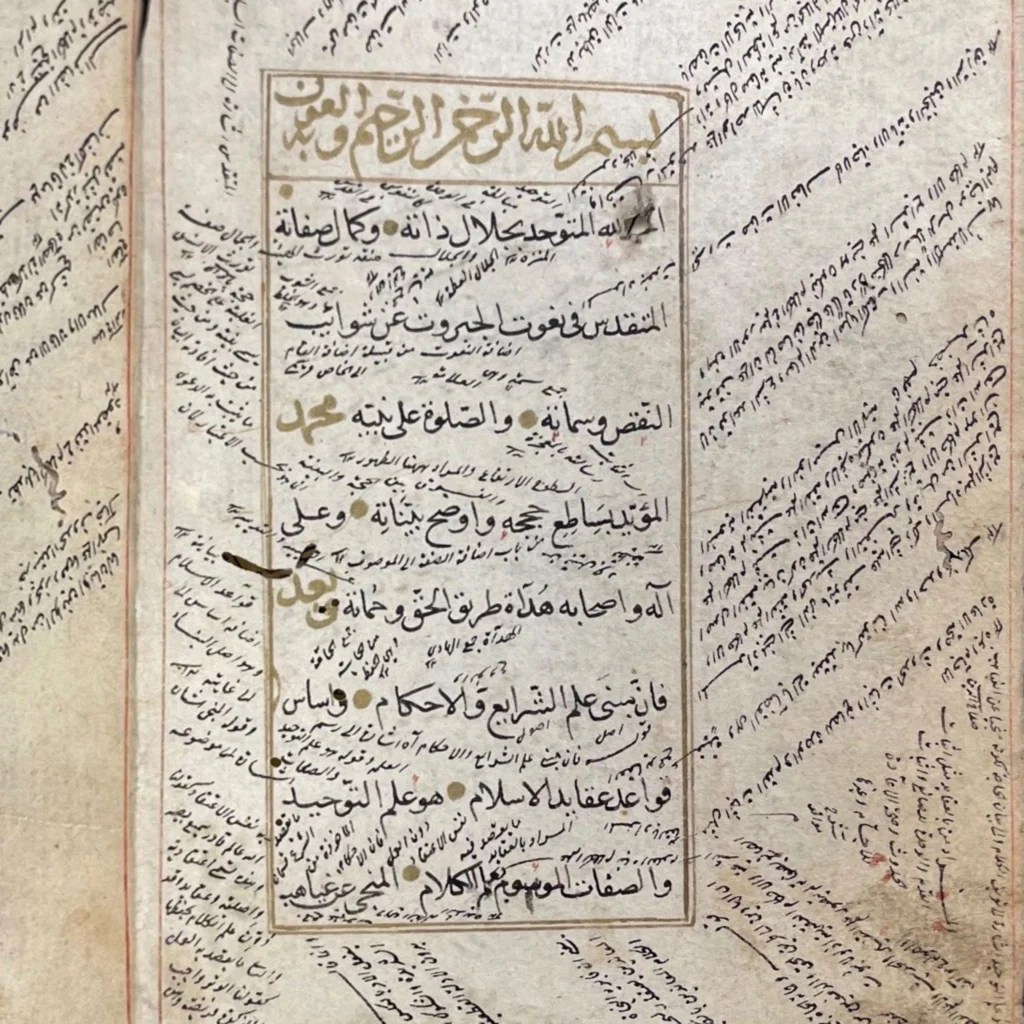
Arabic manuscripts are held in several French public libraries, above all the Bibliothèque nationale de France in Paris, and in municipal and research collections such as the Méjanes library in Aix-en-Provence. They entered these libraries through purchases, diplomatic missions and colonial-era transfers, and most are now described in online catalogues. The Méjanes collection is a useful example of a provincial collection with a documented history and public access.
Which French libraries hold Arabic manuscripts?
Arabic manuscripts in French public libraries are spread across a national collection and a network of municipal and research institutions. The Bibliothèque nationale de France (BnF) in Paris holds the largest and most systematically catalogued collection, while the Bibliothèque Mazarine and the Bibliothèque de l'Arsenal, also in Paris, keep historical collections that include Arabic material. Outside the capital, the Méjanes library in Aix-en-Provence and other municipal libraries hold smaller but significant groups of Arabic manuscripts.
At the BnF, Arabic manuscript records sit within the broader manuscripts department, and the online catalogue lets readers filter by language and collection. Mazarine and Arsenal are historic Parisian libraries now part of the national library network, often consulted for their early European and Middle Eastern collections. Municipal holdings outside Paris are less visible in general web searches than BnF records, which is why searching a union catalogue such as Calames is useful. Because no single institution holds everything, researchers usually combine a national catalogue search with a union catalogue search for municipal and university holdings.
In this context, an Arabic manuscript means a handwritten book or document in Arabic script, usually bound as a codex rather than kept as loose leaves. Libraries identify each item by a shelfmark, the reference that must appear in every catalogue search and consultation request. The two common Arabic script styles are Naskh, used in many eastern Islamic regions, and Maghribi, associated with North Africa and al-Andalus. Scholars use codicology, the study of manuscript books as physical objects, and palaeography, the study of handwriting, to read these collections. A catalogue or finding aid is the structured description that records these details; digitisation, by contrast, produces the images. For readers interested in how catalogue records and scans work together, the note on digitisation of library collections explains the process.
How Arabic manuscripts entered French collections
No single route explains how Arabic manuscripts reached French collections. Purchases, diplomatic missions, deposits from religious communities and transfers connected with French colonial administration in North Africa all contributed. The Bibliothèque nationale de France's Archives et manuscrits catalogue records custodial history for many Arabic shelfmarks, including former owners and acquisition details. A colophon at the end of a manuscript may record the copyist, the date and the place of copying, and is usually read before other evidence.
Provenance is the history of ownership and movement of a manuscript, reconstructed from bindings, stamps, notes and acquisition registers. Former owners may appear in the catalogue under an agent or former-owner field, and their names often indicate the route by which an item moved. In the colonial period, manuscripts sometimes arrived as part of larger administrative or military documentation; today these transfers are described in catalogues as custodial history rather than as a single provenance event.
Growth was strongest in the modern period, though acquisitions began earlier. Some items entered through military transfers in North Africa; others came as diplomatic gifts or institutional purchases. Cataloguing standards in French libraries record fields such as title, author, language and provenance in a consistent way, which makes cross-searching possible. The same descriptive attention appears in printed collections: Arabic and Berber printed language manuals show how French libraries catalogued Arabic-script material across formats.
The Méjanes library in Aix-en-Provence as an example
The Méjanes library in Aix-en-Provence shows how Arabic manuscripts survive outside the capital. It belongs to the Cité du livre, Aix-en-Provence's public library complex, and its heritage collections include Arabic material that appears in French catalogues as manuscrits arabes de la bibliothèque Méjanes. Researchers usually consult these items in the reading room, because not every manuscript has been digitised.
Aix-en-Provence is a university city, and the Méjanes library serves both local heritage and academic readers. A provincial collection of this kind illustrates how public libraries, not only national institutions, preserve and document Arabic manuscript heritage. The catalogue record is the first point of access, and the library's staff can advise on availability and reproduction. The same descriptive principles used for such provincial holdings apply to other manuscript collections, including those discussed in the note on Library of Alexandria manuscripts.
How to find and consult Arabic manuscripts in France
Consulting Arabic manuscripts in France follows a consistent sequence, whether the item is in Paris or in a municipal collection.
- Search the Bibliothèque nationale de France's Archives et manuscrits catalogue to identify shelfmarks and read the descriptive record.
- Search Gallica for digitised manuscripts and page images, and check the rights statement before reusing a reproduction.
- Search Calames for Arabic holdings in municipal and university archives outside the BnF.
- For an item that is not digitised, contact the holding library with the shelfmark and request a reading room appointment or a reproduction estimate.
- When consulting, record the folio or page, note any colophon data, and keep the permanent catalogue link for citation.
Readers without a reader pass can still use digitised material freely where the rights statement permits it. For physical consultation, libraries may require an appointment and, in some cases, a reader card or letter of introduction. The catalogue record usually states whether an item is available, restricted or only accessible in a controlled reading room. Before travelling, confirm the item's location and status with the holding library; shelfmarks can change after cataloguing projects.
When a manuscript is digitised, many French repositories expose page images through the International Image Interoperability Framework (IIIF), which lets readers compare images across institutions. The descriptive record, not the image alone, is what makes an item findable and citable.
How to cite an Arabic manuscript from a French library
A stable citation lets another reader return to the same item. For a manuscript in a French library, record the institution, the city, the collection or department, the shelfmark, the title as given in the catalogue, the date if known, and the folio or page consulted. If the library provides a permanent catalogue link, include it at the end of the citation.
A citation might read: Bibliothèque nationale de France, Paris, Département des manuscrits, Arabe [shelfmark], folio [number], title as recorded in the catalogue, with the catalogue link appended.
If the manuscript is digitised, add the permanent URL of the digitised item and the date you consulted it. For a manuscript with a known title, include the title in transliteration and, where available, in Arabic script, so that catalogue searches return the same item. A note on the script, such as Naskh or Maghribi, can help a future reader distinguish copies visually.
Short reading list and finding aids
The following institutional resources cover the main entry points for Arabic manuscripts in French collections. Search each one with a shelfmark, a personal name or a title.
- Archives et manuscrits, Bibliothèque nationale de France — descriptive records and shelfmark searches.
- Gallica — digitised manuscripts and printed books.
- Calames — archival and manuscript catalogues for university and municipal libraries.
- Cité du livre / Méjanes library — information on the Aix-en-Provence collections and reading room access.
These finding aids are free to search, although some digitised images may have reuse restrictions. Because catalogue interfaces change, it is safer to note the shelfmark and the catalogue name than to bookmark a search result. If a record does not load, search the shelfmark directly in the institution's current catalogue.
Keep reading