
How to Search Manuscript Catalogues: A Practical Guide

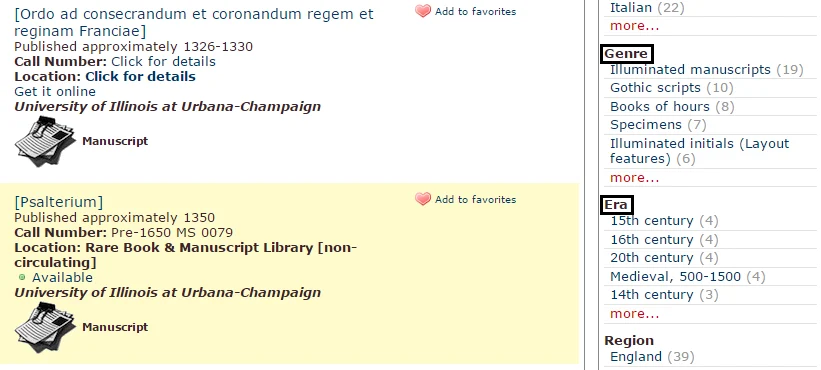
To search manuscript catalogues, begin with the holding library or a union catalogue such as Fihrist, then filter by shelfmark, language, place or date. Read the record carefully: the shelfmark tells you where the manuscript sits, and the descriptive note tells you what it contains.
Where to look: start with the right catalogue
Searching manuscript libraries online begins with choosing the catalogue that matches the question. An institutional catalogue describes the holdings of a single library, so it is the shortest route when the location is already known. A union catalogue aggregates records from several institutions, which helps when a text could be preserved in more than one collection. Before typing a title or author, decide whether the search should stay inside one library or run across many.
Catalogue records sit behind different interfaces, but the core task does not change: move from a name, a title or a reference code to a fuller description. Most records include fields for title, author, language, date and shelfmark, and the shelfmark is usually the item's address within that library. When an institution has digitised part of its holdings, the scan and the catalogue record perform different jobs; the note on digitising Mediterranean manuscripts explains that distinction in practice.
For a known collection, start on the library's own search page and work with its filters. For a wider question, choose a union catalogue and let the same fields narrow the list. A search for the Budeiri Library manuscripts in Jerusalem, for example, begins from that library's own records before any broader tool is needed.
Catalogues and digital libraries for Mediterranean and Arabic manuscripts
Four catalogues illustrate the main ways into Mediterranean and Arabic material: Fihrist, the British Library, BnF and the Library of Congress. Each one asks for a different starting habit, but all four repay slow reading of the record.
Fihrist
Fihrist is a union catalogue of Islamic manuscripts, which makes it a useful first stop when searching arabic manuscript catalogues. It allows keyword search and browsing by author, title, place and date, so a researcher can move from a well-known name to a set of shelfmarks across different libraries. Because it aggregates records from several institutions, the same work may appear with different local references. The Fihrist record should be read alongside the holding library's own catalogue, especially when the digital record is brief. Some groups, such as the Library of Alexandria manuscripts, are now spread across several institutions, so a union search is often the only way to see the full pattern.
British Library
The British Library Archives and Manuscripts Catalogue supports searches by reference, title, date and creator. It is an interim catalogue of records created before October 2023, so newly catalogued items may not appear. Its facets list about 364,420 Western Manuscripts records and 30,403 Oriental Manuscripts records, with Arabic among the language facets. A practical workflow is to search by keyword first, then limit by Collection Area or Language. If the item belongs to a collection type outside archives and manuscripts, the Library's main catalogue takes over.
BnF
BnF Archives et manuscrits is the catalogue of the Bibliothèque nationale de France's manuscripts and archives. Its collections include the Département des Manuscrits, and the site offers simple search and browsing by collection. For Arabic material, the catalogue record may be in French, so searching by both French and transliterated Arabic titles helps. The BnF also points to its Catalogue général and Gallica for printed and digitised material.
Library of Congress
The Library of Congress Manuscripts and Special Collections pages are most useful when an item is described at the level of a collection rather than a single piece. Many finding aids describe the whole group, its arrangement and its access conditions; an item-level record may sit beneath that description. When no individual record appears, the collection-level description is usually the best place to check scope and provenance.
Reading the evidence: shelfmarks, folios, colophons and provenance
Using manuscript finding aids becomes easier once the basic evidence is clear. A shelfmark is the unique address of an item inside one library; the same manuscript may carry a different shelfmark in a published catalogue and in the institution that holds it. In some catalogues the same field is called a pressmark, so check the help page when a label seems unfamiliar. Record the exact string, including punctuation and numerals, because a request form usually asks for that reference.
A folio is a single leaf of a manuscript; references such as 'f. 12r' point to the front of leaf twelve, while 'v' indicates the back. A colophon, usually at the end of a manuscript, can record the copyist, the date and sometimes the place of copying, which is why catalogue descriptions often quote it. Provenance is the history of a manuscript's ownership and movement; ownership marks, later annotations or binding evidence may shape how a catalogue record is phrased.
When using manuscript finding aids, read the descriptive note, not just the title, because that is where the copyist, support and quires are mentioned. Some finding aids are collection-level descriptions rather than item-level records; they explain how a group is arranged and whether a fuller list exists. If no item-level list is present, the collection-level description may still name the catalogues or earlier descriptions that cover the material. Those earlier descriptions may use abbreviations that the library's help page explains.
Printed Arabic and Berber language manuals follow similar bibliographic conventions but leave the manuscript evidence of colophon and quires behind. In requests and citations, copy the shelfmark in the form the catalogue gives, because local systems do not always agree across institutions.
Getting help: search rules and cataloguing standards
Large catalogues publish help pages that explain local abbreviations, search syntax and the order in which fields are shown. The same reference format can differ from one institution to another. The British Library notes that some metadata in its interim catalogue came from older printed catalogues, so occasional errors may have been introduced when they were converted to digital format. A finding aid may place the author's name differently than a reading-room request form expects. Reading those guides before searching saves time because they show the exact field order. Following the institution's own guidance is therefore part of the search, not just an extra. Two habits help most:
- Before searching: note the exact shelfmark, check the date the catalogue was last updated, and read the abbreviations page.
- When citing or requesting: copy the reference verbatim, include the folio or page if given, and keep the institution's form of the author's name.
A first search to try
- Open Fihrist and enter a keyword such as a title, author or place.
- Set the language filter to Arabic.
- Skim the results for the library and shelfmark columns, not just the title.
- Open the matching record and copy the shelfmark exactly.
- Check the holding library's own catalogue to confirm the current reference.
This short sequence uses the same fields as any deeper search and produces a reference that can be used in a request form. If Fihrist does not list the item, repeat the keyword in the British Library or BnF catalogue with the same language filter.
Keep reading