
How to Read a Manuscript Catalogue Reference

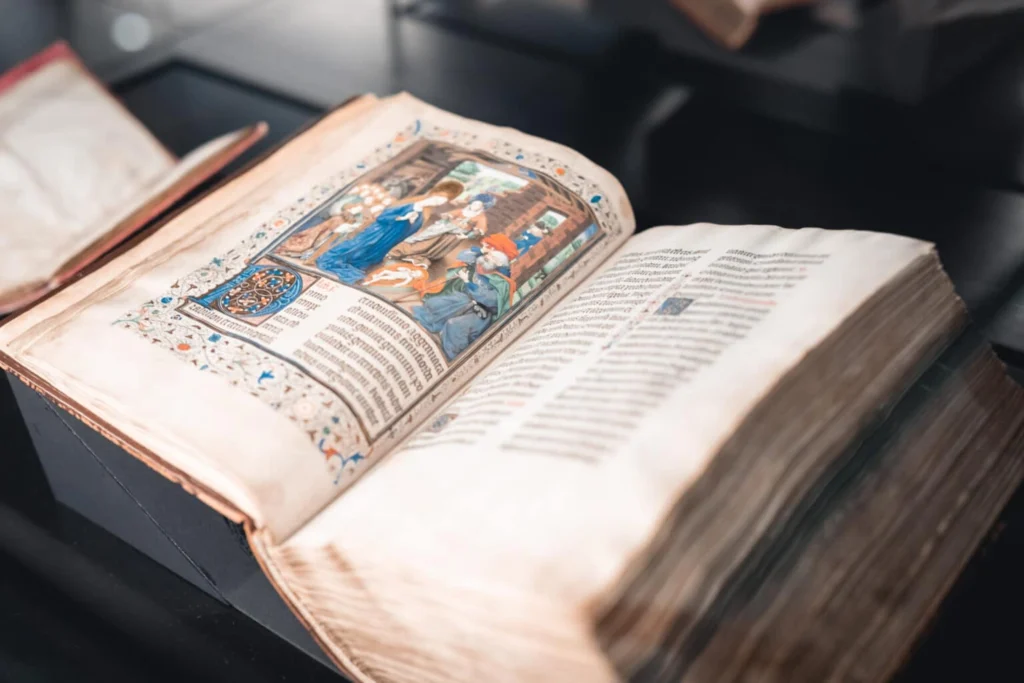
A manuscript catalogue reference is a structured label that pairs a shelfmark with a repository, collection and date. Read the shelfmark first, then the catalogue title, then copy the remaining fields into your citation. This order suits printed catalogues and digital records.
What a manuscript catalogue reference contains
A manuscript catalogue reference is a structured label that links an item to the place where it is held and the record that describes it. A complete reference usually contains a shelfmark, a repository, a collection or catalogue title, a date range, and a folio or item reference when only part of the manuscript is cited. The practical reading order is the same for printed catalogues and digital records: start with the shelfmark, then note the repository, then the collection or catalogue title, and finally the date and folio.
The shelfmark is the item's local identifier. The repository is the institution that holds it. The collection or catalogue title tells you which grouping or published finding aid describes the item. Date and folio narrow the citation to a particular copy or opening. Not every reference includes all five fields, but the order helps when a note is compressed into a single line.
Read the shelfmark first
A shelfmark—also called a pressmark or classmark in some libraries—is the code assigned by a repository to a single manuscript. That explains what a shelfmark is and why it belongs first in the reading order. It is the field that locates the item on a request slip or in a digital catalogue. Library prefixes reveal the system: the British Library uses Add MS for Additional Manuscripts, Arundel for the Arundel collection, and Or for the Oriental collection. Add MS 43725 is the shelfmark for Codex Sinaiticus in the British Library.
Cataloguing guidance in the sector records the repository and the shelfmark together, because the shelfmark alone is rarely enough to find the item. Copy the shelfmark exactly as it appears, including punctuation, spaces and any prefix, and keep the prefix attached to the number. When a library writes MS. 43725 rather than Add MS 43725, do not regularise it; record what the catalogue gives.
Repository, collection and catalogue title
The repository is the institution that owns or holds the manuscript; the collection is the internal grouping or provenance group within that repository. A catalogue title describes the published or digital finding aid, not the manuscript itself. Copy these three pieces separately: a clear reference places the city before the repository when the city is not part of the institution's name, producing the form London, British Library, Add MS 43725 rather than only British Library.
The same distinction appears in library profiles like the Budeiri Library collection profile, where the building, the family collection and the catalogued manuscripts are described as different layers. For an unambiguous reference, list the repository first, then the collection name if it matters, then the shelfmark, and keep the catalogue title outside the shelfmark line. Digital records sometimes compress these fields; when copying from a portal, check whether the site has placed the shelfmark in the identifier field or in the collection title.
Date, folio and item-level detail
Date and folio turn a general reference into a citable part. Dates may appear as a range, as 4th century, or with circa (or c.) when approximate; copy the form used by the catalogue. The British Library catalogue entry for Add MS 43725 dates Codex Sinaiticus to the 4th century. Folios follow the standard abbreviations: fol. 12r for the recto and fol. 12v for the verso. When the reference points to a specific page, the folio belongs at the end of the citation, after the date.
Item-level detail can include script, decoration, binding or provenance, but a reference does not need to reproduce the catalogue description. A separate manuscript profile such as Library of Alexandria manuscripts tends to summarise those details for a whole collection; a single catalogue reference should remain short and traceable. If you only need to identify the manuscript, stop after the shelfmark; add date and folio only when your note uses a particular section.
From reference to catalogue record: standards and fields
Manuscript cataloguing standards map everyday reference fields onto structured records. AMREMM covers manuscripts in many formats, and TEI Manuscript Description encodes manuscript records in digital form. EAD describes archival finding aids. These resources are listed on the RBMS page for rare materials cataloguing, with separate sections for medieval manuscripts and manuscript description.
| Reference field | AMREMM / catalogue record | TEI Manuscript Description | EAD finding aid |
|---|---|---|---|
| Repository and collection | Repository, collection and provenance fields | <msIdentifier><repository>, <collection> | <repository>, <origination> in the finding aid header |
| Shelfmark / identifier | Call number or accession field | <idno> within <msIdentifier> | <unitid> |
| Catalogue title / source | Bibliographic note or citation field | Related bibliographic element in the manuscript description | <bibliography> with a <bibref> |
| Date and folio | Date and folio fields in the item description | Date and folio elements in the manuscript description | <unitdate> and a physical location note |
This mapping explains why copying a reference field by field works: the same four pieces recur in print records, TEI headers and archival finding aids.
Worked example: Codex Sinaiticus (Add MS 43725)
Take the reference London, British Library, Add MS 43725, Codex Sinaiticus, 4th century. Breaking it down:
| Field | Value |
|---|---|
| Repository | London, British Library |
| Shelfmark | Add MS 43725 |
| Catalogue title / name | Codex Sinaiticus |
| Date | 4th century (according to the British Library catalogue entry) |
The repository and shelfmark identify the item; the catalogue title gives the common name; the date places it. No folio is included because the reference points to the whole codex, not to a particular leaf. If a note cited folio 12 recto, the reference would end 4th century, fol. 12r.
This example uses only the British Library catalogue entry for Add MS 43725; the repository and shelfmark are enough to find the record.
How to cite and where to get help
How to cite a manuscript depends on the repository's preferred note style. A minimal note citation starts with repository and shelfmark:
London, British Library, Add MS 43725, Codex Sinaiticus, 4th century.
A bibliography entry can drop the date and keep the stable identifiers:
London, British Library. Codex Sinaiticus. Add MS 43725.
Confirm the details in the institutional catalogue before publishing a citation, because digital portals may change display fields. For digitisation context, see how digitising Mediterranean manuscripts connects images to catalogue records. For examples of structured references in related research, the guide on printed Arabic and Berber language manuals shows how catalogue entries support historical study. As a first search, open a library catalogue, enter the shelfmark Add MS 43725, and compare the fields on screen with the reference in your note.
Keep reading